Rising Damp vs Penetrating Damp: How to Tell Them Apart (and Avoid a Costly Misdiagnosis)
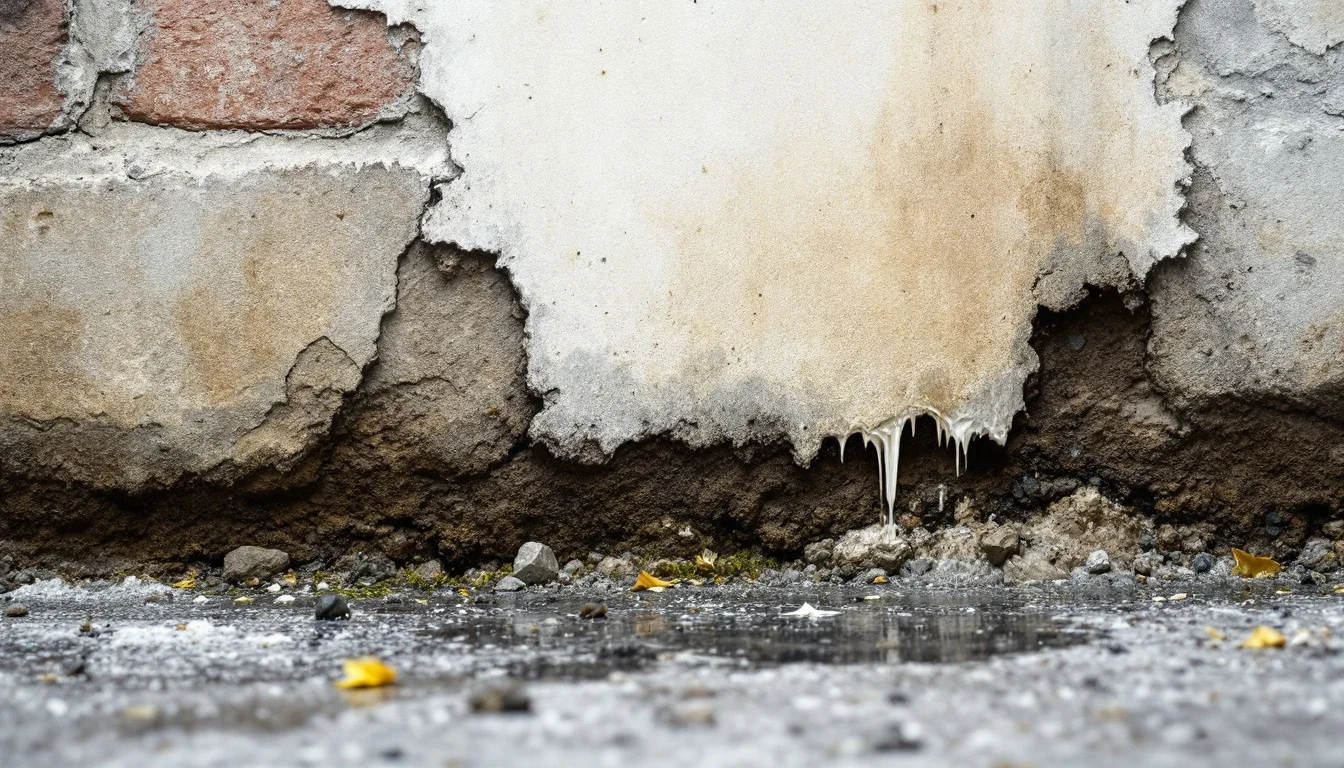
A damp patch near the skirting board can look exactly the same whether the water is climbing up from the ground or seeping in sideways through a cracked roof tile. The stain doesn't tell you which. Yet the two problems are treated in completely different ways, and the more invasive option — a damp-proof-course injection — is the one that deserves more scrutiny before it's proposed. Penetrating damp, so-called rising damp and condensation are not causes of a damp problem; they are three different routes by which moisture moves through, or onto, parts of a building, according to the Royal Institution of Chartered Surveyors (RICS) consumer guide on damp and mould. Confusing a route with a diagnosis is where the costly mistakes start.
Key Takeaways
- A wall-base stain is a symptom of a moisture route, not a verdict — the route (rising, penetrating or condensation) still has to be traced to its actual source.
- RICS states that failure of an original damp-proof course (DPC) is extremely rare, which makes a new-DPC recommendation one of the claims worth verifying before you pay for an injection.
- Genuine rising damp has a signature height band: it typically affects the lower 0.5 to 1.5 metres of a wall, measured from ground level.
- RICS describes "rising damp" as a term that is often misdiagnosed, with the typical error being to assume it is the cause of the problem and that the home needs a new damp-proof course.
- A short field test — checking gutters, height bands and tide marks, then removing the obvious water source and watching what happens — should come before any treatment is proposed.
Two Different Water Journeys: How Rising Damp and Penetrating Damp Actually Move
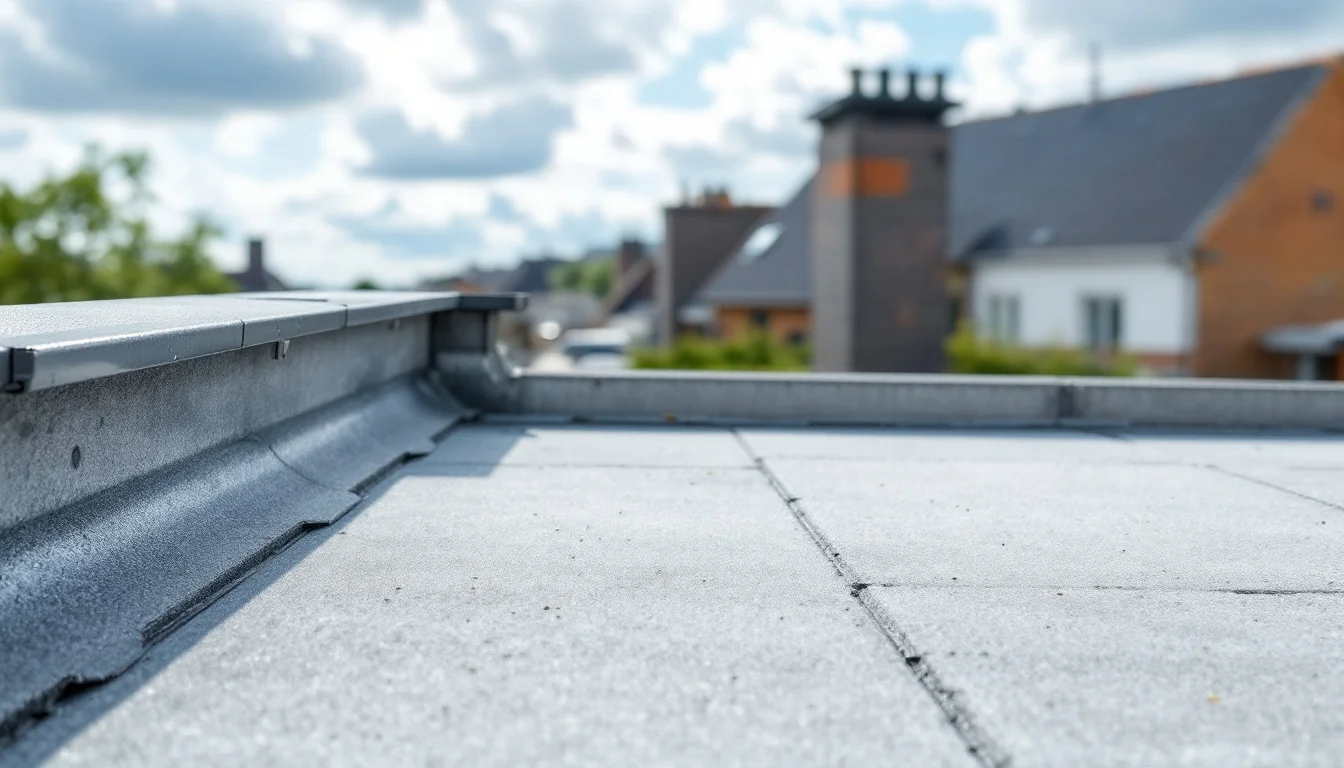
Penetrating damp is the simpler mechanism to picture. It occurs when water moves from one side of a wall, ceiling, roof or floor to the other, according to RICS. A broken roof tile lets rain into the loft; failed sealant around a window frame lets it track down the inside of a wall. The water enters at a point, follows gravity or a crack, and shows up somewhere lower or further along than where it got in. That's why penetrating damp patches are often irregular, localised and linked to a specific weather event — heavy rain, a storm, a blocked gutter.
"Rising damp" describes something structurally different, and RICS is explicit that the term is routinely misused. Properly defined, it is moisture that has moved vertically upwards from the ground, drawn through porous building materials by capillary action — the same suction effect that lets a sponge pull water out of a puddle. Brick, stone and mortar are porous enough to let groundwater climb through them this way, and in practice the moisture typically stays confined to a band near ground level rather than spreading across the entire wall.
The RICS consumer guide on damp and mould credits Professor Michael Parrett FRICS, a building pathologist, as a contributor to its damp and mould guidance. A third route, condensation, is different again: it forms on any surface that is at or below the dew point temperature of the room's air, which is why it tends to appear on cold external walls and single-glazed windows rather than at a fixed height. Ruling condensation out early matters, because its visual pattern can otherwise be confused with the other two.
Reading the Wall: Tide Marks, Height Bands and Point Defects
Once condensation is set aside, the remaining two routes leave different fingerprints on a wall. Rising damp, according to the damp-proofing specialist DW Force Solutions, typically stays within 0.5 to 1.5 metres of ground level and is often visible as a "tide mark" — a line formed by salts that are carried up with the moisture and left behind as deposits once the water evaporates. Penetrating damp, by contrast, has no fixed height: RICS points to a broken roof tile or failed window sealant as typical sources, so the stain can appear high on a wall, around a window reveal, or in a ceiling corner, wherever the water happens to enter and track.
| Criterion | Rising damp | Penetrating damp | Condensation |
|---|---|---|---|
| Direction of movement | Vertically upward from the ground by capillary action (DW Force Solutions) | Horizontally or downward, from one side of an element to the other (RICS) | Forms in place on a cold surface, no lateral movement (RICS) |
| Where it typically shows | Lower 0.5–1.5 m of a wall (DW Force Solutions) | Anywhere linked to the entry point — roof, window, wall (RICS) | Cold external walls, ceiling corners, single-glazed windows (RICS) |
| Typical visual signature | Tide mark of salt deposits (DW Force Solutions) | Localised stain tied to a specific defect — e.g. a cracked tile or failed seal (RICS) | Surface moisture or black mould without a tide mark or point source (RICS) |
Other symptoms sit on top of these patterns rather than replacing them. DW Force Solutions lists crumbling or cracking masonry, peeling or discoloured paint, bubbling wallpaper, flaking plaster and warping skirting boards as signs that can accompany rising damp — but none of them is unique to it, which is exactly why the height band and the tide mark carry more diagnostic weight than the general state of the decoration.
Why 'Rising Damp' Is the Most Overdiagnosed Answer in the Room
RICS, a professional surveying body, states plainly that failure of an original damp-proof course is extremely rare. It goes further: "rising damp" is not a conclusion, because naming the route a moisture problem takes does not identify the source of the excess moisture itself. A typical misdiagnosis, according to RICS's own account, is jumping from a damp patch to "rising damp" to "the home needs a new damp-proof course" — three steps where only the first is actually observed.
DW Force Solutions, a damp-proofing company, frames the same situation differently: it notes that while new homes are generally required to have a damp-proof course installed during construction, many older homes lack one, and a course that was inserted incorrectly can fail. That claim isn't tied to a named country or an official building code, so it shouldn't be read as a universal rule — anyone relying on it should check their own national or local building regulations rather than assume it applies as stated.
RICS carries more weight here as a professional body describing surveying practice rather than a seller of the remedy in question. That doesn't make DW Force Solutions' diagnostic steps worthless — its own sequence of a standing-water test followed by a mortar sample and moisture-meter reading is a reasonable way to confirm capillary rise. The point is sequencing: given how rare genuine DPC failure is, that confirmation step should happen before a new damp-proof course is proposed, not after.
A Five-Step Field Test Before You Call Anyone
Before any specialist is booked, a homeowner can narrow the possibilities considerably with a short sequence of checks. None of them requires tools beyond a tape measure and patience.
- Map the stain. Measure its height from the floor and note its shape. A band confined to roughly 0.5–1.5 metres above ground, especially with a tide mark of salt deposits, points toward rising damp. A stain at an odd height, near a window, or running from a ceiling corner points toward penetrating damp instead.
- Go outside in the rain. RICS suggests this as a genuine first step: check whether gutters are overflowing, whether the roofline looks intact, and whether sealant around nearby windows has failed. A broken tile or a failed seal is often visible without climbing anywhere.
- Rule out condensation first. If the damp tracks the season — worse in winter, concentrated on cold external walls or single-glazed windows, with no fixed lower band — condensation is the more likely route, and it doesn't require the capillary or point-source checks that follow.
- Run the elimination test. Remove or fix the obvious candidate — repair the gutter, reseal the window, or run a dehumidifier — and then wait and watch. DW Force Solutions notes that removing the source of moisture this way should resolve a simple penetrating damp problem on its own.
- Check the construction history, then escalate. If a damp-proof course already exists in the wall and the damp persists after step 4, the cause may not be rising damp at all — a broken pipe or another penetrating source is worth investigating before anyone proposes replacing the DPC. At this stage, a specialist taking a mortar sample and a hand-held moisture-meter reading, as DW Force Solutions describes, is the appropriate next move.
When a Visual Check Isn't Enough: Calling in a Surveyor
If the five steps above don't produce a clear answer, or if the elimination test doesn't resolve the damp, the next move is a professional survey rather than another round of guessing. RICS's own advice is to find where the moisture is actually coming from, and to do that by contacting a specialist building surveyor and asking for a survey that complies with the Joint Position Statement (JPS 2022) — a UK framework for how damp and timber surveys should be carried out.
That specific standard is a UK reference point. Readers elsewhere in Western Europe shouldn't assume it applies to their property; the useful part of the advice travels regardless of location — ask whoever you hire what methodology they follow and whether it goes beyond a visual inspection, rather than accepting a verbal diagnosis on the spot.
Frequently Asked Questions
Can rising damp and penetrating damp happen in the same wall at the same time? Nothing in the diagnostic criteria makes the two routes mutually exclusive. A wall with a genuine capillary-rise problem near its base can also have a separate penetrating defect higher up, such as a failed window seal. This is exactly why fixing one obvious source and then reassessing — rather than assuming a single cause explains the whole wall — is part of the field test rather than a one-off check.
Does a tide mark always mean rising damp? A tide mark is the visual signature of salts left behind as rising damp evaporates, but it is a residue, not a live reading. Once deposited, a salt line can remain visible on a wall long after the moisture source behind it has been dealt with, so an old tide mark on an otherwise dry wall doesn't by itself confirm that rising damp is still active.
How long should I run the dehumidifier or elimination test before concluding it isn't penetrating damp? The available guidance doesn't specify a fixed number of days. What matters more than a set duration is testing across a representative weather cycle — including at least one period of heavy rain — since penetrating damp is often rain-dependent and won't show its pattern during a dry spell.
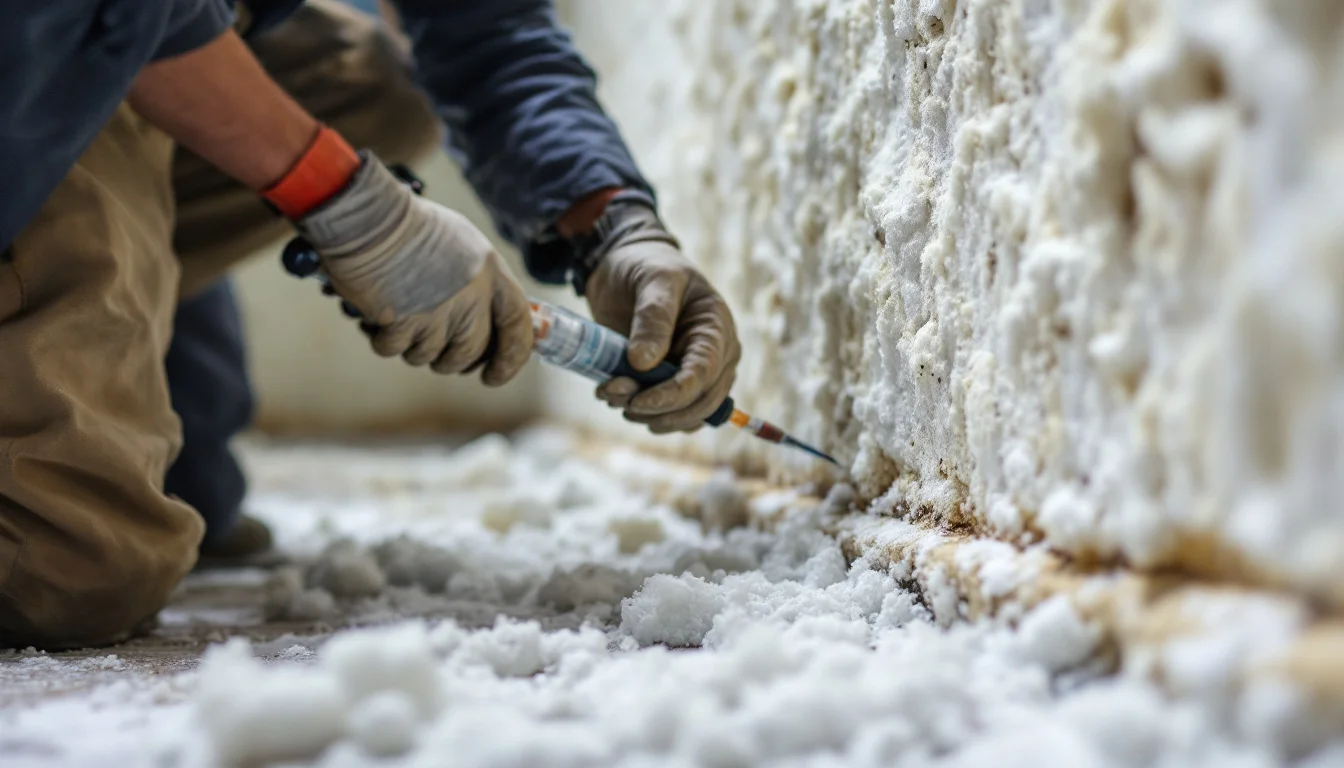
Is a damp-proof-course injection ever justified if DPC failure is so rare? Yes, in the minority of cases where it genuinely applies. The justification should come from a specialist's mortar sample and moisture-meter readings confirming capillary rise at the correct height band — not from a visual tide mark or a verbal diagnosis offered during the same visit as the injection quote.
Conclusion
Roofs and gutters fail with weather, and ageing building stock across Western Europe means more of these buildings will, in time, develop the small defects that let water in sideways. That's a reason to treat a damp patch at the base of a wall as an open question rather than an automatic case of rising damp. The field test described here — not the injection quote — is the first expense worth making time for.