Flat Roof Maintenance: An Owner's Inspection Checklist
Most flat-roof checklists read like inventories: punctures, blisters, cracks, loose flashing, every defect given equal weight. That is precisely why they fail owners. A roof with a hairline crack in a sealant joint and a roof with a sagging deck are not the same emergency, yet a flat list treats them as interchangeable line items.
Guidance from US roofing contractors is the basis for the figures below, and some figures — inspection pricing, cost ratios — are stated in US dollars and square feet. Those numbers are flagged clearly wherever they appear; they describe a logic, not a local price list. What travels well across contexts is the underlying pattern: a large share of defects on a flat roof trace back to water that cannot drain, and knowing which signs you check yourself versus which ones need a contractor inside 24 to 72 hours is what keeps a small puncture from becoming a structural claim.
Key Takeaways
- Walk the roof yourself at least twice a year — commonly a spring and an autumn check — adjusted to your local climate.
- Standing water that lingers 48 hours or longer after rain is not cosmetic; it is a drainage defect that needs attention.
- After hail, strong straight-line wind, heavy rain or a fallen branch, inspect within 24 to 72 hours rather than waiting for the next scheduled check.
- Bring in a roofing professional for a thorough inspection at least once a year, separate from your own routine walkthroughs.
- Material-specific signs — chalking on EPDM, seam separation, deck deflection — tell you which tier of urgency you're actually in, detailed further below.
Why Ponding Water Is the Root Signal Behind Almost Every Flat Roof Defect
A pitched roof sheds water by gravity in a continuous flow down the slope. A flat roof also relies on gravity, but only to move water toward drains, scuppers or gutters — it cannot shed it directly down an incline the way a pitched roof does. That reliance on a built drainage system and an intact membrane to keep water out means the margin for error is thinner from the start.
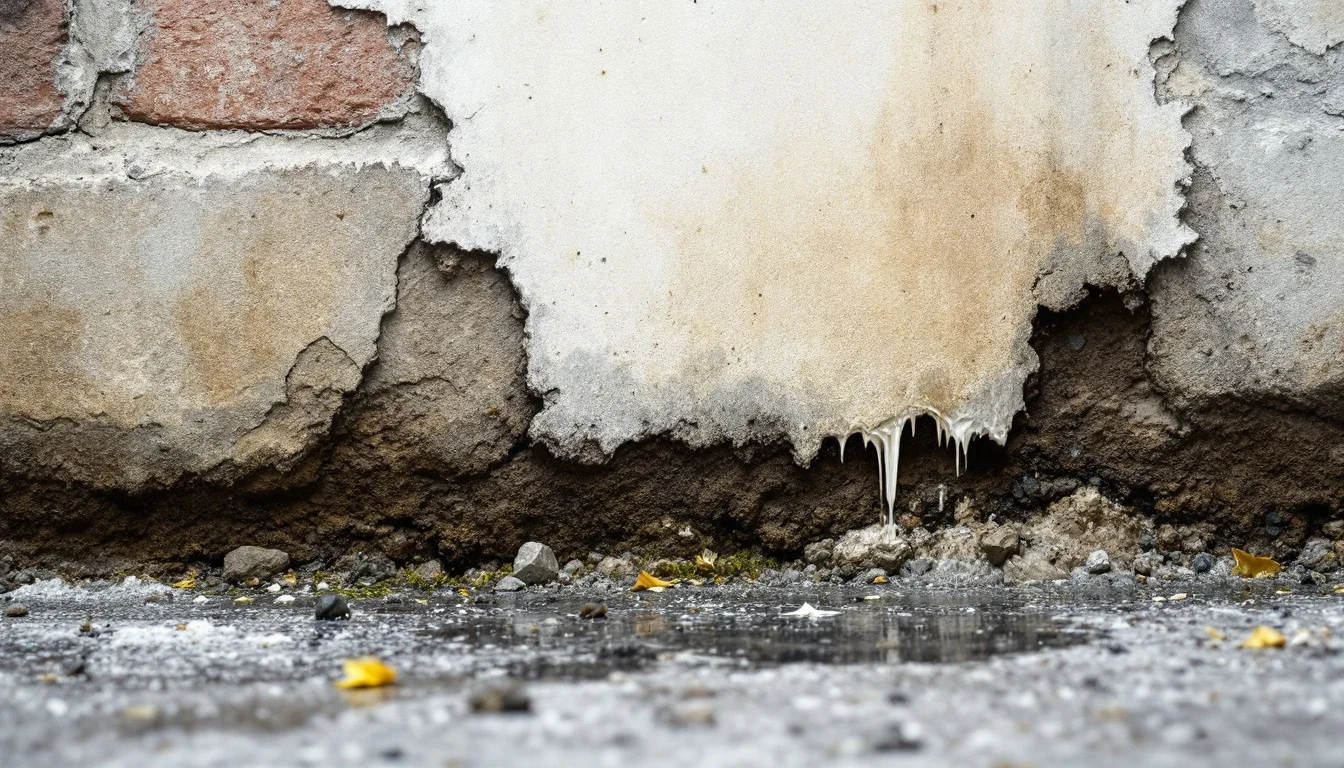
The failure sequence itself is straightforward: debris blocking a drain, a gutter or a scupper causes water to pond, and that ponding, left long enough, produces membrane failure, leaks and eventually structural damage. It is a single chain, not two separate problems — the drainage blockage and the membrane damage are cause and effect of the same event, not independent issues to track separately.
A second detail sharpens the picture. Flat roofs are designed with a slight slope and shouldn't be perfectly flat, but that grade can diminish over time through design flaws, aging or settlement — and the low points that result collect water instead of shedding it, even on a roof that has just been cleared of debris. Standing water accelerates membrane breakdown specifically at those low spots, which is why the same corner tends to fail again after a repair unless the underlying drainage capacity is addressed, not just the blockage.
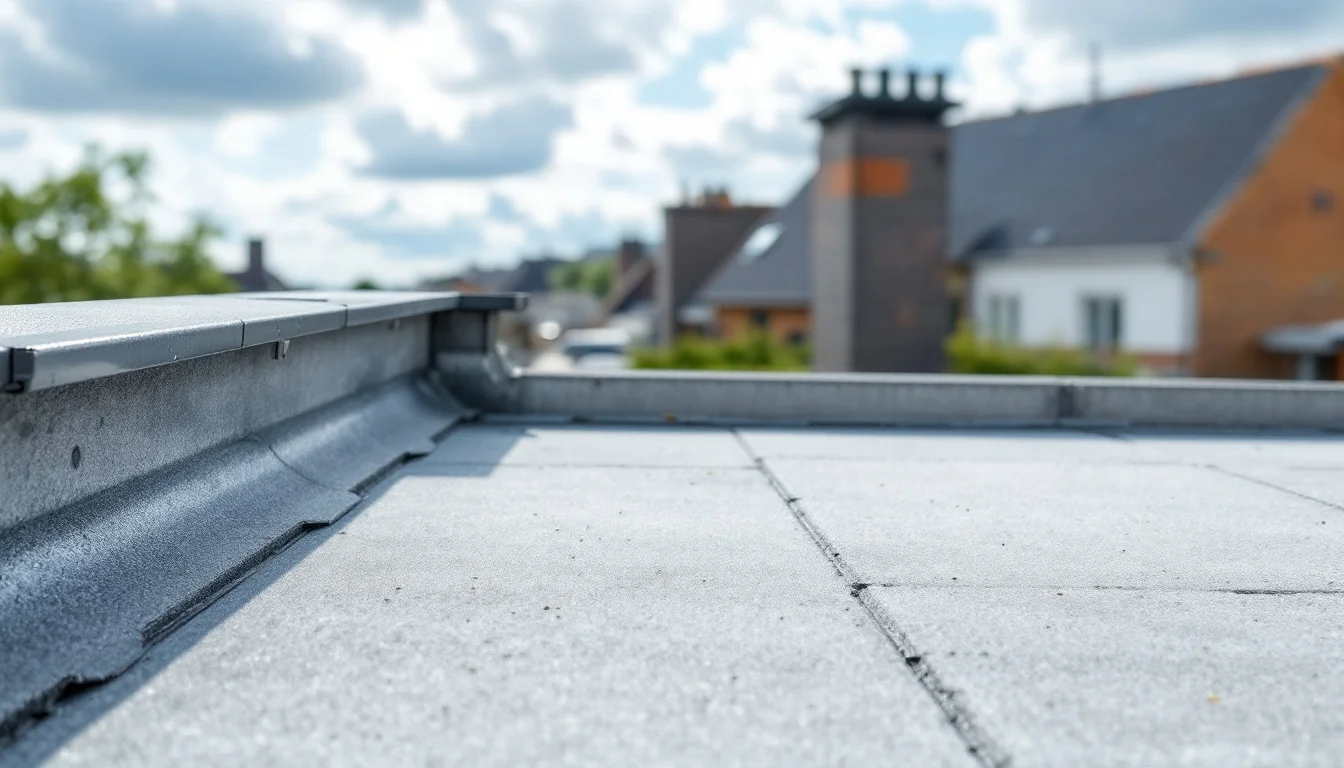
This is also why roof edges and penetrations — around HVAC units, drains and vents — are the most vulnerable points for water intrusion. They sit exactly where slope, membrane and hardware meet, and where the drainage chain is most likely to break down first. It is the reason ponding water deserves more attention on a checklist than almost any other single item: it is rarely the defect itself, but the visible symptom of a drainage failure upstream.
What to Check Yourself: The Routine Walkthrough
Before any checklist, a safety note applies: only walk a flat roof when the surface is dry and stable, and only with appropriate safety equipment. A wet or icy membrane is slippery, and a roof surface that feels soft or springy underfoot should be reported to a professional rather than walked further. Start with a safe exterior visual assessment, then complement it with an interior check from inside the building.
On the roof surface itself, look for:
- Punctures, blisters or cracks in the membrane
- Worn or thinning areas, especially where foot traffic is frequent
- Open seams, loose flashing, or cracks and gaps at flashing joints
- Damage at expansion joints
- Loose edge metal or coping
- Any area of ponding water, and how long it has been sitting
A short list of low-skill preventive tasks belongs in the same routine:
- Clear debris from drains, gutters and scuppers
- Trim back overhanging tree branches
- Replace cracked or dried-out sealant
- Reset or tighten loose fasteners
Reading the Specific Signs: Membrane, Drainage and Structure
A generic walkthrough catches obvious damage. Reading what a specific membrane or structure is telling you takes a bit more context, and it changes depending on what the roof is actually made of.
On an EPDM membrane — a synthetic rubber sheet commonly used on flat roofs — the priority is seam integrity: adhesive failure at field seams or at the perimeter edge is where leaks typically start. Surface chalking, a powdery residue on the membrane, signals UV degradation of the material itself rather than a mechanical defect.
Drainage deserves a closer look than "clear the gutters." A proper evaluation covers gutters, downspouts, roof drains, scuppers and overflow drains, checked for whether they are sized adequately for the roof's area and local rainfall, plus a slope analysis to identify low spots that collect water independently of any blockage.
Structural signs matter because they indicate the deck itself, not just its waterproofing, is compromised:
- Wood decks: rot, warping, or loose fasteners
- Concrete decks: cracking, spalling, or settlement
- Beams and joists: visible deflection or sagging
- Metal components: corrosion, especially at connection points
Membrane Type at a Glance
| Roof covering | Primary maintenance focus | Typical failure mode |
|---|---|---|
| Single-ply (TPO, PVC, EPDM) | Seam adhesion and perimeter edges | Seam separation, membrane chalking |
| Built-up roofing (BUR) | Surface coating and ply integrity | Blistering, surface cracking |
| Modified bitumen | Seam laps and flashing details | Granule loss, seam lifting |
| Metal | Fastener and seam corrosion | Rust at connections, loose panels |
The table is a starting point for knowing what to look at, not a substitute for a professional reading the specific installation.
The Three-Tier Triage Framework: Self-Check, Schedule, or Call Now
Every fact above fits into one of three levels of urgency. Sorting them this way is what turns a checklist into a decision tool rather than a reading exercise.
Tier 1 — Self-check, twice a year Walk the roof yourself, commonly once in spring and once in autumn, adjusted for local climate. This covers the routine visual walkthrough: membrane surface, flashing, drains, and the interior signs described earlier.
Tier 2 — Schedule a professional, within weeks Bring in a roofing contractor for a thorough inspection at least once a year, in addition to your own routine checks. This tier also covers anything you notice but cannot diagnose yourself with confidence: membrane chalking, seam separation, or a suspicion that the drainage system is undersized for the roof's area. The thresholds worth flagging to that contractor are the same ones detailed above — EPDM seam adhesion failure at field seams or the perimeter edge, wood deck rot or warping, concrete spalling or settlement — rather than a vague sense that something looks off.
Tier 3 — Call within 24 to 72 hours This tier is triggered by specific, identifiable events rather than gradual wear:
- Standing water that has not drained after 48 hours
- Hailstones larger than roughly 2.5 cm, or wind that has visibly lifted edge materials
- A targeted post-storm inspection after hail, straight-line wind, heavy rain, or a tree branch striking the roof
- Any visible sagging in the deck or structure, which points to a structural weakness rather than a surface defect
Managing the Roof as a Work Surface: Traffic, Access and the Paper Trail
A flat roof rarely stays untouched between inspections. It doubles as a work platform for HVAC technicians, electricians, IT and telecom crews, and increasingly solar installers. Their traffic crushes insulation underfoot, scratches membranes, and can create holes that go unnoticed until the next rain. Walkway pads along common access routes and restricting access to necessary personnel reduce this wear, but they do not eliminate it — a reason to check those paths specifically during a routine walkthrough.
The second overlooked habit is documentation. A roof information file is worth keeping even for owners who outsource all the physical checking. It should hold the original plans, the installation date, contractor details, warranty documents, every inspection report and photo taken over time, any moisture test results, repair proposals, and a dated leak log. On its own this file does nothing to the roof; what it does is let a contractor or insurer reconstruct the roof's history quickly, instead of starting from zero at the first sign of a problem.
That history also matters for warranty standing. In the US, manufacturers commonly require regular inspections and documented maintenance to keep a roofing warranty valid, and industry guidance there — from bodies such as the NRCA — frames this as a standard owner responsibility. Requirements are not standardised the same way across European markets, so the practical step for an owner in Belgium or elsewhere in Western Europe is to check the specific warranty terms issued by the installer or manufacturer, rather than assume a general rule applies.
What Maintenance Actually Costs — And Why the Logic Travels Even If the Prices Don't
US roofing-contractor estimates give a rough sense of scale, even though the currency and unit don't transfer directly. Preventive maintenance there is commonly quoted on a per-square-foot basis (a US measurement unit, roughly 0.093 m²), at a few to several cents per square foot per visit; one contractor's illustrative example uses $0.25 per square foot per year as an annual rate. A 10,000 square-foot roof — about 930 m² — maintained at that rate costs around $2,500 annually, according to that contractor estimate.
The number that matters more than the dollar figure is the ratio next to it: a neglected roof, the same source notes, can cost over 200% more to repair than a maintained one, a gap attributed to waterlogged insulation. That multiplier is the part worth carrying into a European context — not the $2,500 figure itself, which reflects US labour and material pricing, but the idea that deferred maintenance compounds cost rather than simply delaying it.
The same contractor estimate suggests a written maintenance plan can extend a flat or low-slope roof's working life by 5 to 10 years or more. Applied to a local quote, the exercise an owner can actually run is simple: compare the price of a maintenance contract against even a fraction of a full re-roofing quote, and judge whether the multiplier holds locally the way it's reported to hold in that source market.
Frequently Asked Questions
Is it safe for a building owner to walk on a flat roof? Only under the right conditions: a dry, stable surface, appropriate safety equipment, and a membrane that doesn't feel soft or springy underfoot. If any of those conditions aren't met, treat it as a tiered decision rather than a judgment call — a wet surface simply waits for drier weather, but a soft or springy deck is a Tier 3 matter regardless of conditions, and warrants a professional call rather than a second attempt to walk it.
Can poor maintenance void my roof warranty? It can, depending on the manufacturer and installer terms attached to your specific roof. The practical safeguard is the same roof information file worth keeping for insurance purposes — dated inspection reports, photos and a leak log that show maintenance actually happened, not just that it was recommended. For an owner in Belgium or elsewhere in Western Europe, it's the specific warranty document that determines the requirement, not a general US-style assumption.
Why does ponding water keep coming back in the same corner of the roof? Flat roofs are designed with a slight slope, but that grade can diminish over time through design flaws, aging or settlement, so certain low points collect water even right after the roof has been cleared of debris. Standing water accelerates membrane breakdown specifically at those spots, which is why the same corner tends to fail again unless the underlying drainage capacity — not just the blockage — is addressed.
Beyond storm damage, what else justifies an unscheduled check? Unplanned roof traffic from HVAC, electrical or solar crews is a reason to inspect sooner than the twice-yearly routine, particularly along the paths those crews actually walk. It's also the right moment to update the roof's dated record — noting which paths were used and when — so that a leak appearing near that path later can be traced quickly rather than treated as a mystery.