Interior Wall Cracks: Which Are Harmless and Which Are Not
A crack appears on the living-room wall overnight, and the first instinct is to assume the worst. That instinct often overstates the risk. Cracks in walls can reveal a lot about a home's health — they are a natural result of everyday use, but they can sometimes signal something more serious, according to the National Association of Realtors in its guide "When You Shouldn't Ignore the Cracks in the Wall."
The difficulty is that "serious" is not always obvious from a glance. A hairline mark and a structural one can sit a few centimetres apart on the same wall and mean entirely different things. What actually separates them is not fear or guesswork, but a combination of pattern, direction and how the crack behaves over time — which is exactly what a structured way of reading cracks can offer.
The Crack Severity Matrix: What Each Pattern Really Means
Two professional traditions have each built their own way of judging wall cracks: American real-estate guidance from the National Association of Realtors, and Australian building-inspection practice described by Inspect My Home. Lined up side by side, their width thresholds and pattern categories combine into a single crack severity matrix, organised by the shape of the crack rather than by one magic number.
| Pattern | Typical cause | Width or pattern signal | What to do |
|---|---|---|---|
| Hairline | Plaster shrinkage, minor settlement, ordinary drying of materials | Thinner than 1 mm, spiderweb-like, the most common type found on drywall | Monitor weekly for changes in length or width; patch with joint compound once stable |
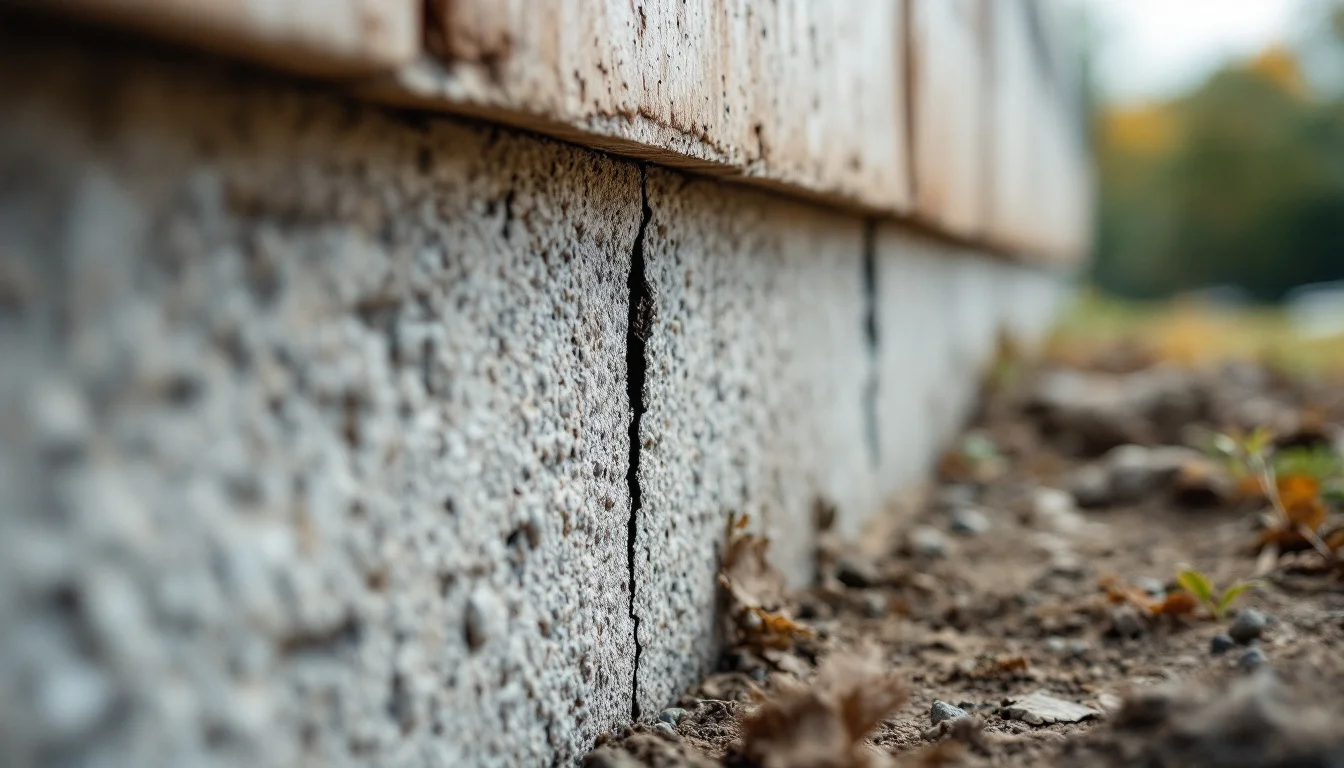
| Vertical, on a settled wall | Foundation settlement | Minimal concern below 3 mm; evaluation recommended past 3 mm; assessment needed past 5 mm | Watch for growth; fill once it has stopped moving |
| Vertical, on a newly plastered wall still drying | Plaster drying and settling | Usually harmless while the plaster dries, whatever the 3 mm and 5 mm figures say; a crack wider than 25 mm in a drying wall points to a more severe underlying issue | Wait for the wall to dry fully before filling; past 25 mm, have it assessed without waiting |
| Horizontal | Expansive soil pushing against a foundation wall; structural movement | Width is not the deciding factor | Consult a professional regardless of how narrow the crack looks |
| Diagonal or stepped | Movement in foundations, footings or load-bearing elements | Investigate past 5 mm, or any crack that keeps worsening | Have it assessed, especially if several large cracks appear together |
The settled-wall vertical thresholds in that table — under 3 mm, past 3 mm and past 5 mm — reflect general guidance from the National Association of Realtors rather than a formal technical standard; the diagonal and stepped thresholds come from Inspect My Home's inspection practice.
The drying-wall row is deliberately separate. Inspect My Home notes that vertical cracks commonly appear simply because the plaster is still drying and settling, and that filling or repainting should wait until it has fully dried — but if a vertical crack in that same context exceeds 25 mm, it points to a more severe underlying issue needing immediate attention. That 25 mm figure describes a drying wall, not a settled one: it is a different situation entirely, measured against a different baseline than the 5 mm threshold that applies once a wall has already settled — which is why the table gives the two cases their own rows rather than one shared limit.
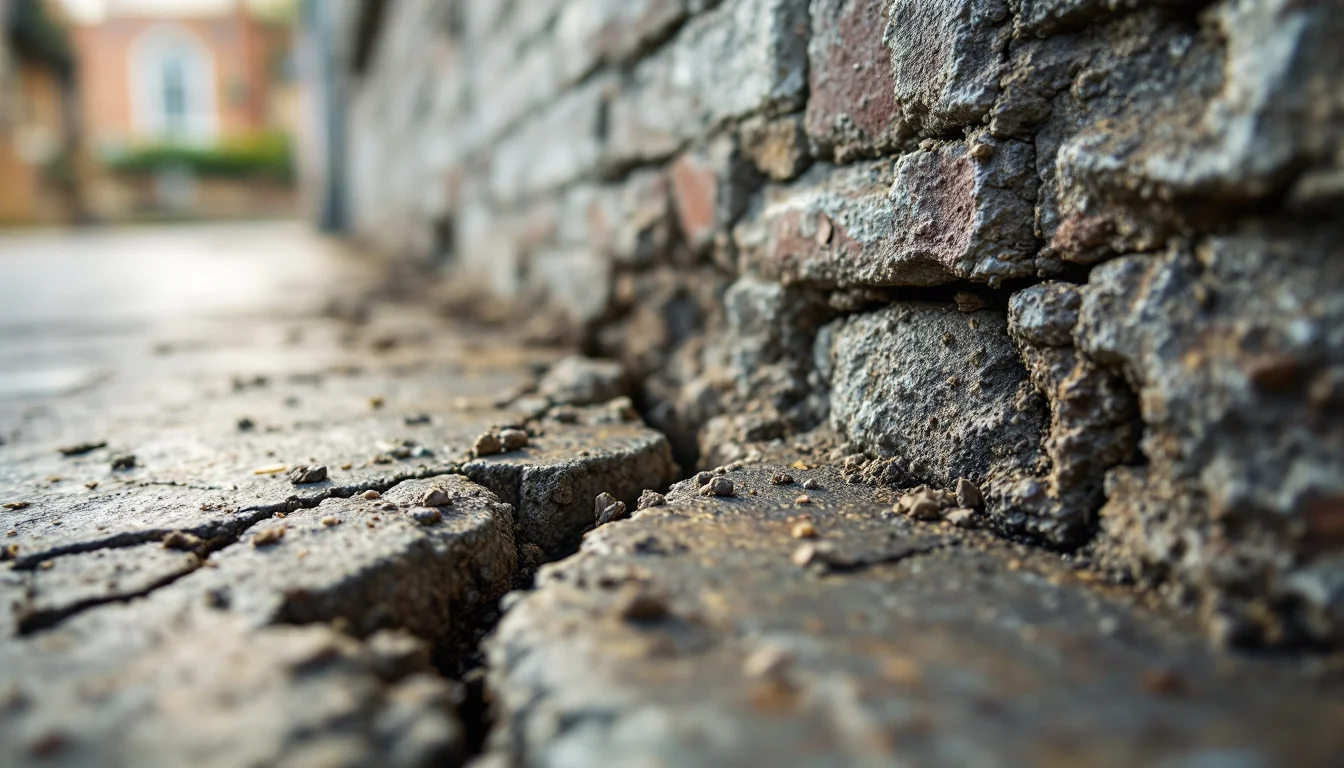
Horizontal cracks sit outside the width logic altogether, at least on foundation and masonry walls. The National Association of Realtors recommends consulting a professional for any horizontal crack on those walls, no matter how thin, because this pattern often results from structural movement as expansive soils build up against a foundation wall. Left alone, it can progressively widen and, in time, contribute to wall failure. Horizontal cracking in interior drywall or at ceiling-wall joints can have more benign origins, such as shrinkage or minor framing movement, so context matters before assuming the worse case. Diagonal and stepped cracks get similar treatment in Australian inspection practice, where they are named among the most concerning patterns a wall can show — and where multiple large cracks appearing together, whatever their orientation, often point to foundation subsidence rather than a single localised problem.
Why US and Australian Guides Give Different Crack Width Limits
The gap between the two scales is not a disagreement about physics — it reflects two different sources. The American figures come from real-estate guidance published by a national trade association. The Australian figures come from a building-inspection company's practical guidance. Neither source spells out exactly how its thresholds were derived, so the gap is best read as two reasonable ways of categorising the same phenomenon rather than a dispute over the underlying structural reality.
That divergence in sourcing explains why the two traditions don't always line up on a single shared number. Reading the two scales together, rather than picking one as "the" rule, is what lets a homeowner apply either tradition's logic correctly instead of treating every wide crack the same way.
Patching a Hairline Crack Yourself
Hairline cracks are the one category where do-it-yourself repair genuinely applies. Because they are thinner than a millimetre and tend to stay that way, they can be patched and repainted using joint compound — a paste made of gypsum powder and other binders — once a few weeks of observation confirm the crack is not getting longer or wider.
The weekly check matters more than the patching itself. A hairline crack that holds its size is cosmetic. One that creeps outward, even slowly, has crossed into territory that calls for a structural engineer's evaluation rather than another coat of filler.
What's Actually Moving Behind the Wall
A crack on an interior wall is often the visible end of something happening outside the house entirely. Soil behaviour is a common culprit: extreme climate swings, including drought followed by heavy rainfall, can cause clay soil to shrink and then expand, putting pressure on the structure above it.
Water compounds the problem. Clogged gutters, flooding, garden sprinklers, or blocked and leaking pipes can saturate or erode the soil around foundations, and that moisture imbalance can show up indoors as a crack weeks or months later.
Trees play a double-edged role. Planted too close to a building, they exert pressure on the foundation and draw moisture from the soil, causing it to shrink. Counter-intuitively, removing a large, established tree can be just as disruptive — the soil it was anchoring can shift as conditions change, sometimes producing new movement of its own.
Two further causes sit outside the building altogether:
- Proximity to ongoing construction, heavy machinery or earthworks can send ground vibrations through nearby soil and into a home's walls.
- Seismic activity, where it occurs, can cause enough structural movement to produce visible cracking.
Insurance, Value and the Cost of Waiting
Whether a crack is worth a claim depends heavily on how it started, and on the specific terms of the policy, which vary by insurer and country. In many cases, cosmetic cracking caused by settlement, plaster drying or general wear and tear is not covered by building insurance — it is treated as a maintenance matter rather than damage.
Cracks that follow a sudden event are a different story. Damage resulting from a burst pipe, for instance, may be claimable under policy clauses covering sudden, accidental damage — often described as "escape of water" — since the cause is sudden and external rather than gradual wear.
Filing a subsidence-related claim can carry its own longer-term consequence in some insurance markets: it may lead to increased premiums and make future home insurance harder to obtain, regardless of how the repair itself goes. That trade-off is worth weighing before escalating a claim for a crack that turns out to be moderate.
The opposite risk — doing nothing — carries its own cost. Ignoring serious cracks can let structural issues get worse, which in turn can decrease a property's value and introduce genuine safety risks for anyone living in it.
Questions Readers Often Ask
Should a newly built home already be cracking? It can be. Newly built homes may show cracks after the one-year mark, once the structure has had time to settle and fully dry out — this is a normal part of a building's early life, not necessarily a defect.
Can a wall crack point to a problem that has nothing to do with the wall itself? Yes. Doors and windows that start sticking in their frames can signal underlying foundation movement, often appearing around the same time as cracks but worth checking independently.
Could an insect problem be behind a crack rather than settlement? It is worth ruling out. Termites consume wood and can weaken structural framing enough to show up as cracking in ceilings and walls during an infestation, with damage typically concentrated on wooden beams or boards near ground level and around roof rafters — areas worth a quick look before assuming the cause is structural settlement.
What about a house that has sat empty for a long time? Homes left vacant can develop drywall cracks simply from a lack of consistent climate control. Minor cracks in that situation can usually be retaped and repainted, but a property left empty for an extended period warrants a professional inspection that includes the foundation, not just the visible plaster.
A crack rarely tells its whole story in a single glance; it tells it over several weeks of watching the same spot. That shift — from asking "is this bad?" the day a crack appears, to tracking what it does next — is what separates a wall that needs paint from one that needs an engineer. The two professional traditions compared here do not fully agree on where the line sits, and that disagreement is itself useful: it shows that a width in millimetres only means something once it is read against the crack's shape, its location and its history on that particular wall.