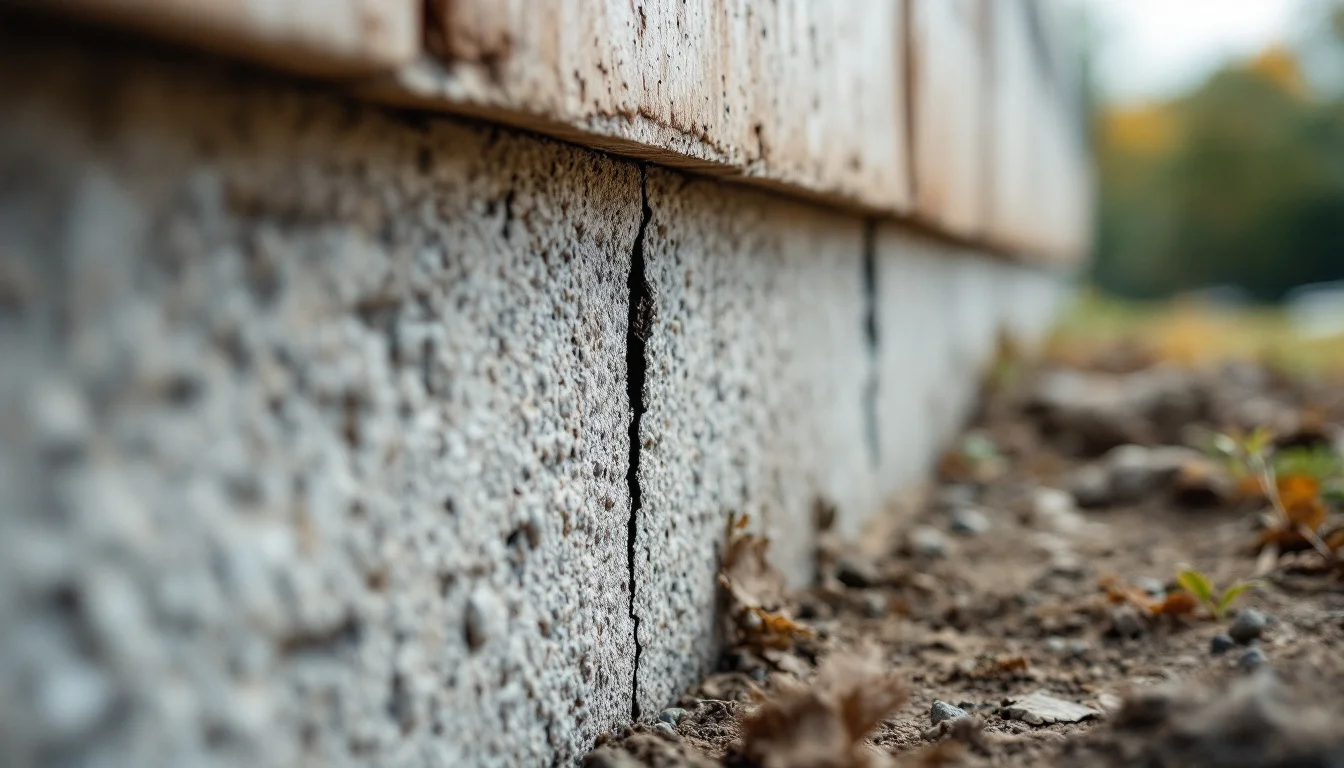
Subsidence, Settlement or Heave? How to Read the Cracks Before You Call a Surveyor
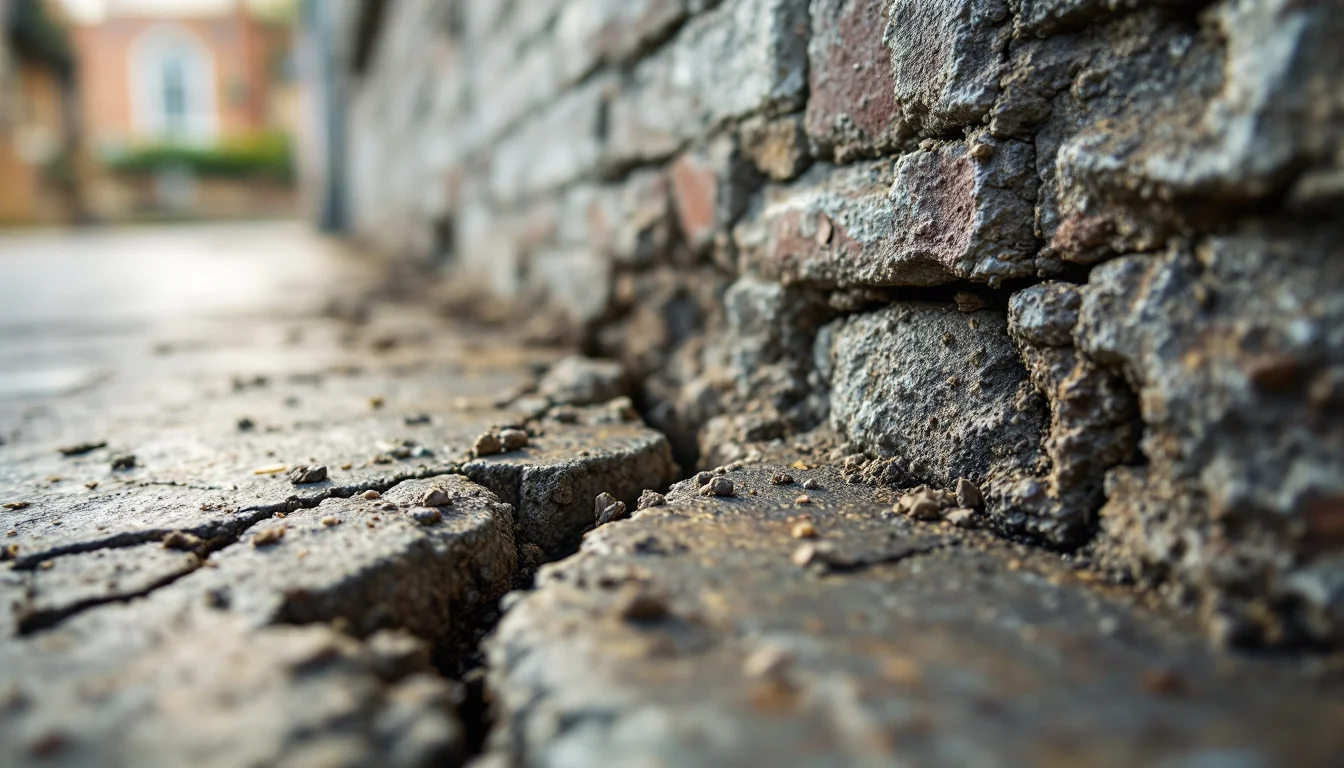
Subsidence is the default diagnosis for almost any crack in a wall, and it is often the wrong one. Ground movement under a building can happen in several distinct ways, though not every type moves the structure in a different direction: subsidence and settlement both move the ground downward, while heave pushes it upward and landslip shifts it sideways — each for a different reason.
Subsidence itself has a precise meaning: it is what happens when the ground beneath a property sinks, pulling the foundations down with it and shifting walls and floors until cracks appear, according to Total Landlord Insurance's guide to subsidence. But sinking is only one of four possible movements. Settlement, heave and landslip each leave similar-looking marks on plaster while pointing to entirely different causes — and, as insurers treat them differently, entirely different consequences for the owner's wallet. Reading the direction of movement, not just the crack itself, is where real diagnosis starts.
What actually causes the ground to sink in the first place matters for diagnosis. Clay-rich soil contracts when it loses moisture, which is why subsidence claims tend to spike in hot, dry weather — the clay shrinks, pulls away from foundations, and the structure follows it down.
Trees are a related problem, though their removal can produce the opposite effect. Their roots extract large amounts of water from the soil as they grow, which can weaken the structural stability of the ground beneath a foundation even as the roots themselves push underneath it. That is why a mature tree close to a building is treated as a subsidence risk factor in its own right, not just something to watch after it is removed. Removing a large tree can then over-correct the problem, since soil that was previously being drained is free to reabsorb moisture and expand — which is what produces heave.
Water does not have to come from vegetation to be a hazard. Leaking pipes, floods and sustained heavy rain can simply wash soil away from beneath a building, leaving it unstable, and faulty drainage systems can accelerate the same erosion process.
The building itself can also be the weak link. Older properties often have shallow or comparatively weak foundations, which puts them at greater risk from any of the causes above. The use of incorrect building materials or inadequate preparation of the ground before construction can likewise produce movement years later, and even modern buildings are not immune if they stand on made-up ground — soil that has been artificially built up rather than left in its natural, compacted state. Another, more dramatic cause is void formation: properties built over former mines or underground caverns can experience sudden collapse as those voids shift or give way, and heavy construction nearby — drilling, piling or demolition — can disturb ground structure enough to trigger movement in a neighbouring property.
Settlement deserves a closer look precisely because it is so often mistaken for its more serious cousin. It happens when the ground beneath a new building compacts under the sheer weight of the structure, typically within the first decade after it is built, and is common enough to be considered a normal part of a building bedding into its site. The cracks it produces are usually cosmetic and can simply be plastered over. The practical difficulty is that settlement cracks and subsidence cracks are not always easy to tell apart by eye, which is exactly why the distinction matters commercially as much as structurally: Total Landlord Insurance, for example, covers subsidence but explicitly excludes the normal settlement, shrinkage or bedding-down of a new structure, along with settlement or shrinkage of made-up ground or materials brought onto a site. A policyholder who assumes any crack is covered because "it's probably subsidence" may find the claim refused once a surveyor identifies it as ordinary settlement instead.
Because the movement itself happens underground and out of sight, the signs worth checking for are the ones that show up inside the property: diagonal cracks in walls, particularly near windows and doors; cracks wider than roughly 3mm; doors and windows that stick or no longer sit square in their frames; wallpaper that creases or ripples without any obvious damp; and floors that slope or become noticeably uneven. Wallpaper rippling is worth a second look before jumping to conclusions, because the same symptom can come from condensation rather than ground movement — checking the windows for condensation first thing in the morning is a simple way to rule dampness in or out before assuming the worst explanation.
A short checklist helps separate a crack worth mentioning to an insurer from one that is simply the fabric of an older house. Is the crack wider at the top than at the bottom? Is it wider at any point than roughly 3mm? Can it be seen from both inside and outside the property? And is it near a known weak point, such as a door, a window, or the joint where an extension meets the original house? None of these on its own is proof of subsidence, but the more of them apply, the stronger the case for a professional opinion. Most cracks in walls are harmless and perfectly normal, a function of a building settling, drying out or simply ageing. It is cracks that keep growing — toward 15mm or more — that should be investigated to confirm the property is still structurally sound.
The case for acting early is as much financial as structural. Subsidence typically progresses slowly, which makes it tempting to put off dealing with it, but that slowness is deceptive: left unaddressed over the long term, it carries a real risk of serious structural damage and even collapse, and the cost of early prevention is almost always lower than the cost of later repair. There is a second financial dimension beyond the repair bill itself. A property with a documented history of subsidence is often harder to sell, and most insurers will charge a higher premium to cover it going forward, since a known history raises the likelihood of future claims. That makes an early, accurate diagnosis worth more than peace of mind — it can protect the property's insurability and resale value as well as its walls.
If the checklist above points toward something more than cosmetic ageing, the first call is not to a builder but to the insurer. They can advise on the next steps, and in most cases that means instructing a chartered surveyor, whose job is to establish which of the four types of movement is actually responsible before any remedial work begins. Getting that diagnosis right first avoids paying to fix the wrong problem.
Key Takeaways
- Settlement is downward and usually harmless: it is the ground compacting under a new building's own weight, typically within its first ten years.
- Heave is the opposite of subsidence — soil swells with trapped water and pushes foundations upward, often after a nearby tree is removed or dies.
- Landslip is the fourth type of ground movement, shifting the ground sideways rather than up or down — distinct from the vertical motion of subsidence, settlement and heave.
- A crack wider than about 3mm, diagonal, and near a door or window is worth noting; one that keeps growing toward 15mm or more needs investigating.
- Insurance treatment varies by movement type: some insurers cover subsidence but exclude settlement, so the label attached to a crack has financial weight, not just technical interest.