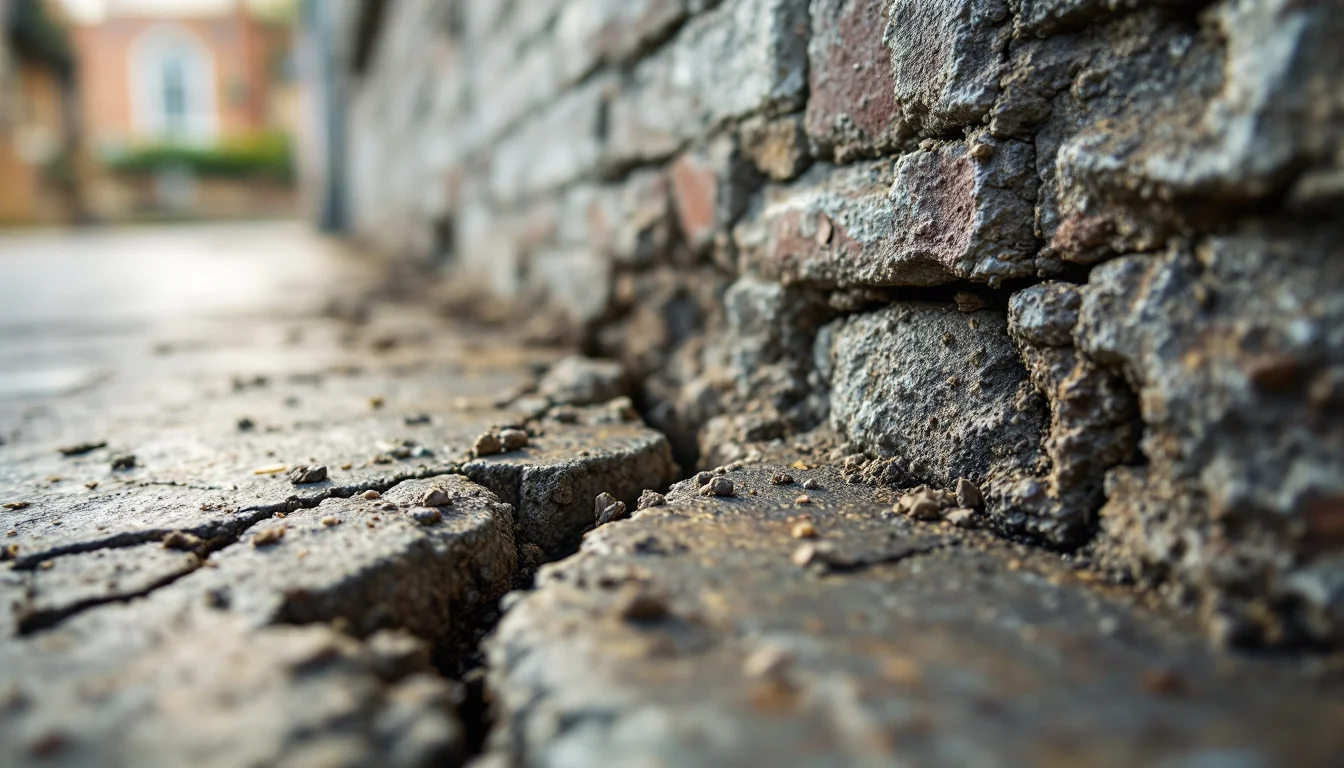
Why Your Foundation Moves: Reading the Difference Between Harmless Cracks, Subsidence and Heave
The Crack That Means Nothing and the Crack That Means Everything
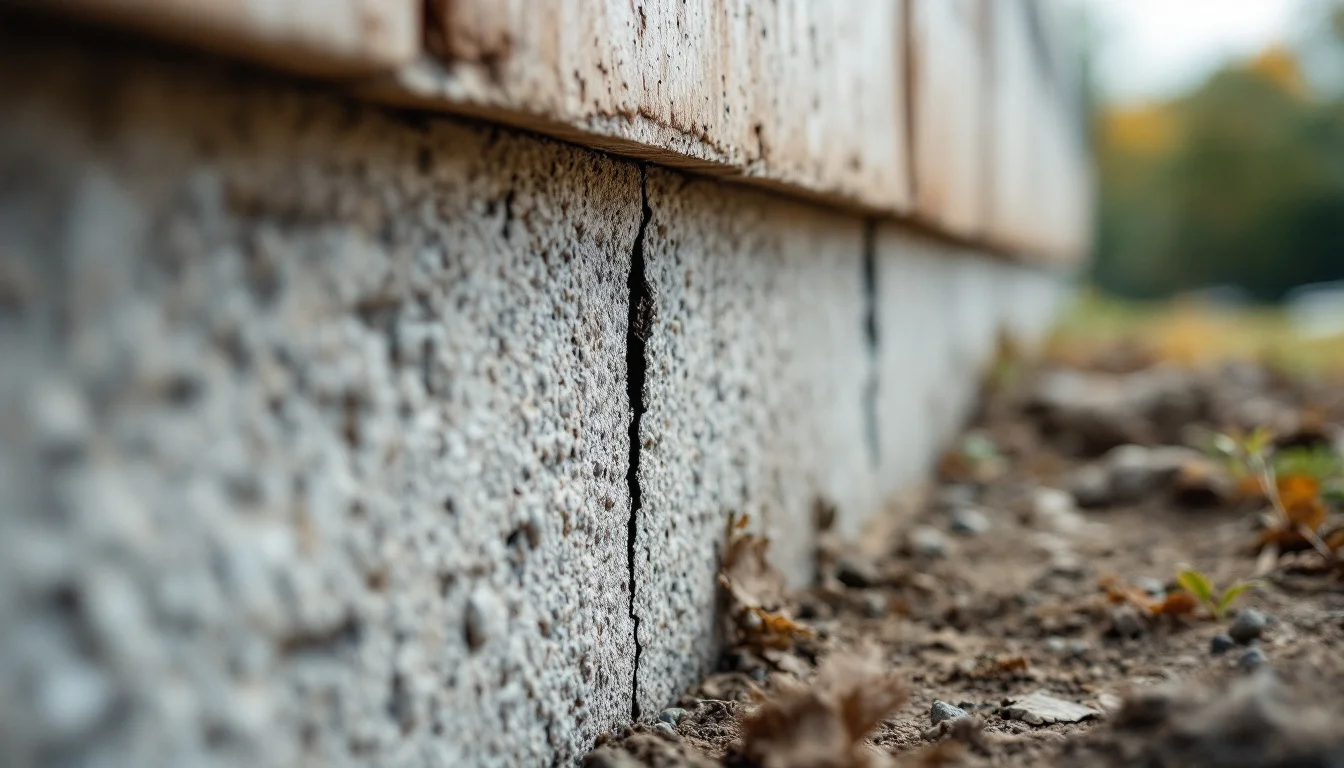
A hairline crack appears above a door frame and the owner's first instinct is to panic. A second crack, wider and diagonal, runs along a wall for months without anyone noticing. In practice, a hairline crack is far less likely to matter than a wider diagonal crack, and that mismatch between what alarms people and what actually threatens a building is where most foundation anxiety goes wrong.
Subsidence is the term for the downward movement of the ground that supports a building's foundations. The ground does not always sink evenly, and that unevenness is what turns a geological event into a structural one. Learning to read the pattern of a crack — its direction, width and location — is a key skill any owner can pick up, but it is not the only way to tell a cosmetic nuisance from a problem needing attention; other signs like sticking doors and sloping floors also help.
Key Takeaways
- The ground moving is not the problem by itself; it is uneven movement — differential settlement — that strains a rigid structure and produces visible damage.
- Diagonal cracks that are wider at the top are the classic subsidence signal; thin, straight hairline cracks are usually harmless and stop on their own.
- Four underground causes account for most real subsidence: clay soil shrinking and swelling, tree roots drawing out moisture, leaking drains eroding soil, and poorly compacted or poorly prepared ground.
- Heave is the mirror-image problem — the ground pushing upward, usually from clay swelling with water — and it produces cracks with the opposite shape: wider at the bottom.
- Left untreated, genuine subsidence can misalign walls and floors, and in serious cases affect a property's habitability, resale value and mortgageability.
What's Actually Happening Underground When a Foundation Moves?
A foundation does not need the ground beneath it to stay perfectly still. Soil moves, slightly, all the time, in response to moisture, temperature and load. What a foundation cannot tolerate is moving by different amounts in different places at the same time. That mismatch is called differential settlement, and it is the mechanism behind almost every crack worth worrying about.
Picture a house as a rigid box sitting on ground that is not uniformly stable. If one corner sinks faster than the rest — because the soil underneath is wetter, looser, or disturbed by a root system — the box cannot simply tilt as a whole. It resists, because walls, lintels and floors are built to hold their shape. That resistance is what cracks the plaster.
The visible symptoms follow directly from this physics. A wall stretches diagonally between the stable part of the foundation and the sinking part, so the crack that appears runs diagonally too, often widening toward the top where the strain accumulates. Door and window frames, built square, twist slightly out of true and start sticking. None of this requires dramatic ground failure — modest, uneven sinking sustained over months is enough to show up as a crack a homeowner can see from across the room.
The Four Real Causes of Ground Movement
Most ground movement traces back to one of a short list of underground conditions. None of them is exotic, and most can be reasoned about just by looking at a garden, a drainpipe or a tree.
1. Clay soil shrinking and swelling. Clay is a cohesive soil: it swells when it absorbs water and shrinks, sometimes dramatically, when it dries out. In the UK, clay soil is described as the single biggest cause of subsidence, particularly where long dry spells follow wet winters. The same mechanism shows up on the other side of the Atlantic: in Southern California, clay soil is also named as one of the leading causes of subsidence, there driven by heavy rain followed by long, dry summers. The common thread is not the country — it is the seasonal pattern. Wherever a wet period is followed by a prolonged dry one, clay-rich ground contracts, and foundations resting on it can lose support unevenly. It is worth treating this as a climate pattern to watch for locally, rather than a problem tied to one region's geology.
2. Tree and shrub roots. Roots extract moisture from the soil around and under a foundation, and a large mature tree can draw out roughly 10 to 150 gallons (about 40 to 570 litres) of water a day, drying and compacting the soil in its reach. Species with particularly extensive root systems — poplars, willows and oaks are named examples — carry a higher risk, and that risk rises with the size of the tree and its proximity to the building.
3. Leaking drains or poor drainage. Deteriorating pipework lets water escape into the ground in places it was never meant to reach. Depending on the soil type, this can wash away granular particles, expand clay unevenly, or erode channels that eventually form voids beneath a foundation.
4. Poor compaction or ground history. Granular soils such as sand or gravel need proper compaction during construction; if they are not compacted, the weight of the building gradually presses them down or washes them out over time. A related issue is ground that was never adequately prepared before building, or ground affected by historical mining works — both leave a foundation sitting on support that was compromised before the first wall went up.
Reading the Cracks: Subsidence, Heave, or Nothing at All?
Crack-reading is less about memorising a diagnosis than about asking three questions in order, before deciding whether to call anyone.
1. What shape is the crack, and which way does it taper? A crack that is diagonal or zig-zags around a door or window frame, and that is noticeably wider at the top than at the bottom, is the classic signature of subsidence — ground sinking below, pulling the structure down and apart as it goes. A crack running the opposite way, wider at the bottom and tapering or stepping as it rises, points toward heave: the ground pushing up, typically from clay swelling with water, rather than sinking away.
2. How wide is it, and is it alone? Subsidence cracks worth taking seriously are usually at least a few millimetres wide, not a fine line. If the crack is thin, straight — vertical or horizontal rather than diagonal — and has stayed the same for a couple of years, it almost certainly falls into the harmless category: cosmetic settling that stopped progressing long ago and simply never got painted over.
3. Is anything else in the building changing with it? A crack rarely tells the whole story on its own. Doors and windows that have started sticking, wallpaper that is rippling without any sign of damp, gaps opening around frames or skirting boards, and floors that have begun sloping or feel spongy underfoot are all part of the same pattern when they appear together. A single hairline crack with none of these companions is low on the list of concerns; a diagonal crack accompanied by two or three of these signs moves up that list considerably.
Run through these three questions and most owners can sort what they are looking at into one of three rough categories: likely cosmetic, possible subsidence, or possible heave. None of them replaces a proper inspection, but they decide whether that inspection is urgent or simply sensible.
Why This Isn't Just a Cosmetic Problem
The reason crack-reading matters is that genuine subsidence does not stay contained to a single hairline mark. Left untreated, it can progress to the point where walls and floors visibly misalign, and cracks that started as fine lines widen into something structural.
In more serious cases, the consequences extend beyond the building fabric itself. A property affected by advanced, unaddressed subsidence can lose value, become harder to sell, and in severe instances be difficult to mortgage at all; where insurance cover is inadequate, the cost of putting the damage right can also be substantial.
None of this means every crack is heading toward that outcome — most are not. But it explains why the distinction between a harmless hairline crack and a genuine subsidence signal is worth making early, rather than waiting to see which way a crack goes over the following winter.
Frequently Asked Questions
What should I do first if I suspect subsidence? The recommended starting point is a professional assessment rather than guesswork. A competent inspection looks at floor levels across the building, the pattern and symptoms of any cracking, the condition of nearby drainage, and the type of soil the foundation sits on. Those four elements together tend to reveal whether movement is active, historic, or still developing — information a crack on its own cannot give.
Is it risky to remove a large tree near my foundation? It can be, but the risk runs in both directions. Removing an established tree takes away the root system that had been drawing moisture out of the surrounding clay, and the soil can respond by swelling as it rehydrates — the heave problem rather than the subsidence one. A rough rule of thumb: the heave risk is highest when a tree significantly predates the building, since the foundation was laid on clay soil that had already been dried and shrunk by that tree's root system over the years. If the tree is roughly the same age as the building, the risk is generally lower, simply because its roots have had less time to dry the soil out to any depth.
Does fixing subsidence always mean digging up my garden? Not necessarily. Traditional underpinning, which reinforces a foundation by extending it deeper, typically requires major excavation. An alternative approach used in some ground-improvement work involves pumping a material under pressure through small-diameter tubes inserted into the soil; the material expands, compacts the surrounding ground, displaces excess water and fills voids, creating a more stable base without the large-scale digging underpinning requires. Manufacturers of these systems publish performance figures — lifespan, carbon reduction, lifting precision — that are worth asking about directly, since they are commercial claims rather than independently verified standards, and they vary by product and installer.
The Real Takeaway
The question worth carrying forward is not really "do I have subsidence," asked once and answered. It is closer to: what is my soil doing across the seasons, what is my drainage doing after heavy rain, and what are the nearest trees doing to the ground they sit in. Clay shrinks and swells on a yearly rhythm, roots keep growing, and pipework keeps ageing — none of it stays static long enough for a single inspection to be the final word.
Treating crack-watching as an ongoing habit, rather than a one-time diagnosis triggered by panic, is what actually catches a developing problem early enough to matter.