How a Condensing Boiler Works — and How Maintenance Protects Its Efficiency
A condensing boiler is sold on one number: its headline efficiency rating. What rarely gets explained is that this figure isn't a fixed property stamped into the metal, the way a tank's capacity or a radiator's output rating is. It's a conditional outcome. It only happens if something inside the system stays true whenever the burner fires — and, as later sections show, that condition can hold for some of the heating season rather than all of it, depending on how the system is designed.
That something is a temperature. Specifically, the water coming back into the boiler has to stay below a threshold set by the exhaust gases themselves. When it does, the appliance condenses water vapour out of the flue gas and recovers heat that a traditional boiler simply vents outside. When it doesn't, the same appliance behaves like a conventional one — expensively.
This is the thread that runs through everything else: the design of the heating system around the boiler, the maintenance that protects the one component where condensation physically happens, and even the daily log a technician might keep on a commercial unit.
What actually happens inside a condensing boiler
The mechanism is straightforward once the temperature requirement is understood. Flue gas leaving a gas-fired boiler carries both sensible heat and latent heat bound up in the water vapour produced by combustion. A conventional boiler discharges that vapour-laden gas straight up the flue, losing the latent heat along with it. A condensing boiler instead routes the flue gas past an extra heat exchange surface that remains in contact with the cooler water returning from the heating circuit. If that return water is cold enough — specifically, below the dew point of the exhaust — the water vapour in the flue gas condenses back into liquid on contact with it, releasing the latent heat it absorbed during combustion. That released heat preheats the water on its way back into the boiler, which is what RasMech describes as a system designed to retrieve energy normally released from the boiler stack as waste.
That recovered energy is also why the efficiency comparison in the headline numbers isn't marketing exaggeration: a traditional boiler simply has no mechanism to reclaim the latent heat vented with its exhaust, while a condensing unit is built specifically to capture it — provided, again, that the return water arriving at the heat exchanger is cold enough to make condensation happen in the first place.
| Condensing boiler | Traditional boiler | |
|---|---|---|
| Efficiency rating | Up to 98% in some cases | Generally 70% to 85% |
| Flue gas temperature | Cooled below 140°F (about 60°C) | 300°F (about 150°C) or higher |
| Heat recovered | Sensible and latent heat | Latent heat lost up the flue |
Source: RasMech, a US heating-maintenance contractor, 2024.
Why the system around the boiler decides how often it condenses
The return temperature is not set by the boiler. It is set by the heating circuit the boiler feeds. Water leaves the boiler hot, gives up heat in the radiators or the floor, and comes back cooler; how much cooler depends on how big the emitters are, how fast the pump pushes the water round, and how hard the system is being asked to work that day.
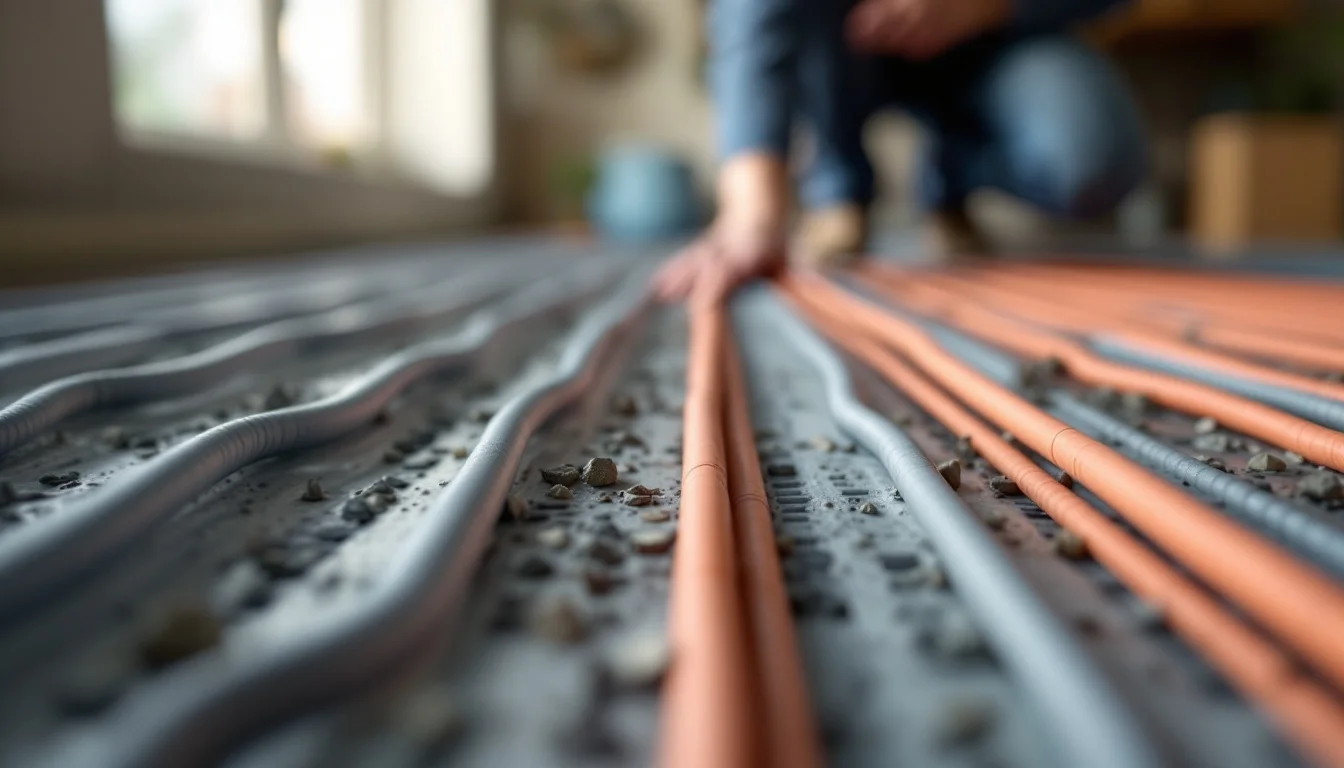
That is why the same appliance condenses all winter in one house and only on mild days in another. Large radiators, or an underfloor circuit, give up a lot of heat at a modest flow temperature, so the water comes back cool and the flue gas condenses whenever the burner runs. Small radiators sized for an old boiler need hot water to warm the room, so the return comes back hot too, and the boiler spends cold snaps running like a conventional one. Controls matter for the same reason: a boiler that lowers its flow temperature on mild days, instead of firing flat out and switching off, keeps the return below the dew point for far more hours of the season.
None of this shows up on the appliance label. It is the part of the efficiency figure that belongs to the installer and the system design, and it is worth asking about before the boiler is chosen rather than after.
The maintenance that protects the condensing surface
The industry has a built-in diagnostic for when this process starts to fail. RasMech recommends cleaning the heat exchanger whenever the flue temperature runs more than 54°F (30°C) above the water return temperature — a gap that signals the condensing surface is fouled or scaled and can no longer transfer heat efficiently into the return water, even if that water is nominally cold enough to condense against.
What a service actually covers, and who does which part
Bosch's published maintenance schedule for its condensing gas boilers splits this upkeep into tiers. Owners are expected to carry out visual checks every six months, including confirming that the pressure relief valve is operating correctly — and contacting the installer or a qualified service person to run that test if they don't know how to do it themselves. A full annual service is reserved for a qualified service person, who carries out a combustion test and adjusts the air/fuel ratio as needed, inspects the heat exchanger for damage or blockages, cleans the condensate trap and refills it with fresh water, cleans the air intake filter and water filter, checks both gas and water system pressure, inspects the expansion vessel, and examines wiring for damage. A deeper task — fully cleaning the heat exchanger — is scheduled only once every five years, also by a qualified service person.
The combustion test performed annually serves the same underlying goal as the return-temperature requirement: keeping the burn efficient. Adjusting the air/fuel ratio ensures the boiler isn't drawing excess air that would cool the flame and waste fuel, or running too rich and producing incomplete combustion — the same incomplete-combustion risk RasMech flags as a safety concern. In that sense, the annual service isn't a separate concern from the condensing-efficiency story; it's protecting the conditions that make condensing possible in the first place, from the burner's air/fuel mix through to the heat exchanger surface where the actual condensation occurs.
Some of these checks have hard numbers attached. For one Bosch product line, the gas supply pressure to the boiler is specified as between 3.5 and 11.5 inches water column for natural gas installations, and between 8 and 13 inches water column for LP installations — a range a technician checks as part of inspecting the gas supply piping for leaks or damage.
Some of the annual tasks address components with no obvious link to condensing efficiency but a clear link to safe, reliable operation: inspecting the expansion vessel to confirm the heating system can accommodate water expansion as it heats, examining wiring for degradation, and confirming gas and water pressures sit within specification. Skipping these doesn't just risk a drop in the condensing performance that defines the 98% figure — it risks the kind of fault, such as a gas leak or an undetected water leak, that Bosch's inspection protocol is designed to catch before the boiler is restarted.
What to do when a check finds something
Bosch is explicit about what happens when an inspection turns up a problem. If a visual check reveals damage, discoloration, or a gas or water leak, the instruction is to turn off the power, water, and gas supply to the boiler immediately and report it to the installer or a qualified service person — and any components found damaged during inspection must be replaced before the boiler goes back into operation. Owners are also told to keep flammable or combustible materials away from the unit and to keep the air in the room it occupies uncontaminated, since the boiler draws combustion air from that space.
RasMech's own annual start-up checklist adds detail at the component level. It calls for inspecting the flame signal, noting that the flame should read at least 10 micro amps at high fire, and for pulling the gas arm each year to clean the heat exchanger directly rather than relying solely on the return-temperature diagnostic. It also recommends replacing the condensate neutralizer kit annually — the component that treats the mildly acidic condensate before it drains away, protecting plumbing downstream from corrosion.
Underlying all of this is a safety requirement, not just a performance one. RasMech notes that condensing boilers are gas-fired appliances carrying risks that include gas leaks and improper venting or incomplete combustion, and that this work should be entrusted to qualified heating professionals with condensing-boiler-specific expertise. Bosch's own safety notice makes the same point in sharper language: because the appliance is gas-fired, only professionals qualified to work on such equipment should do so.
The logbook: how a commercial unit proves it is still condensing
On larger installations, RasMech's advice is to keep a running log rather than rely on an annual visit to notice drift. The entries it lists are the ones that reveal a boiler sliding out of condensing mode long before a fault code appears: combustion analyser readings (carbon monoxide in parts per million and the percentage of oxygen), inlet gas pressure both at rest and at full fire, pump voltage and amperage in operation, the condition of the wiring, and any visible rust or discoloration. Read alongside the flue and return temperatures, a log turns the 30°C rule into a trend line: a gap that widens month on month means the heat exchanger is fouling, and the clean can be scheduled before the efficiency has quietly gone.
Key Takeaways
- A condensing boiler recovers heat by condensing water vapour from combustion back into liquid, using the heat released to preheat incoming water.
- Condensing — and the efficiency gain that comes with it — only happens if the return water temperature stays below the dew point of the boiler's exhaust gases.
- Condensing boilers can reach up to 98% efficiency, against roughly 70–85% for traditional boilers, according to RasMech, a US-based HVAC maintenance resource.
- Only professionals qualified to work on gas-fired heating equipment should service the appliance, per Bosch's published safety notice for its condensing gas boilers.
- RasMech recommends scheduling professional maintenance at least once a year.
- RasMech recommends cleaning the heat exchanger whenever flue temperature exceeds the water return temperature by more than 54°F (30°C), a sign the condensing surface is fouled.
- Bosch's annual service includes a combustion test with air/fuel ratio adjustment, heat exchanger inspection, and condensate trap cleaning; a full heat exchanger clean is scheduled only every five years.
- RasMech's annual start-up checklist includes checking that the flame signal reads at least 10 micro amps at high fire and replacing the condensate neutralizer kit yearly.
Frequently asked questions
Why does a condensing boiler need low return water temperatures? Because latent heat can only be recovered if the water vapour in the flue gas actually condenses, and that needs a surface colder than the exhaust's dew point. The return water is that surface. If it comes back hot, nothing condenses and the boiler runs like a conventional one.
How often should a condensing gas boiler be serviced? Both sources point to an annual professional service: a combustion test, heat exchanger inspection, condensate trap clean, filter cleaning and pressure checks. Bosch adds a full heat exchanger clean every five years on some model lines; RasMech cleans it yearly on the commercial units it maintains.
When does the heat exchanger need cleaning? When the flue temperature runs more than 30°C (54°F) above the return water temperature. That gap means heat is no longer crossing the exchanger surface efficiently, usually because of scale or fouling.
What should I do if I see damage, discoloration or a leak on the boiler? Switch off the power, water and gas supply and call the installer or a qualified service person. Any damaged component is replaced before the boiler is restarted.
Conclusion
The efficiency printed on a condensing boiler is a promise with a condition attached: keep the return water below the exhaust's dew point, and keep the surface where condensation happens clean enough to pass the heat on. The first part belongs to the system design and controls around the boiler; the second belongs to the annual service and, on larger units, the logbook. Treat the number as something the installation earns every heating season, not something the appliance owns.